Artificial Neural Network
Artificial Neural Networks (ANNs)
The inventor of the first neurocomputer, Dr Robert Hecht-Nielsen, defines a neural network as −
"...a computing system made up of a number of simple, highly interconnected processing elements, which process information by their dynamic state response to external inputs.”
Basic Structure of ANNs
The idea of ANNs is based on the belief that the working of the human brain by making the right connections, can be imitated using silicon and wires as living neurons and dendrites.
The human brain is composed of 86 billion nerve cells called neurons. They are connected to other thousand cells by Axons. Stimuli from the external environment or inputs from sensory organs are accepted by dendrites. These inputs create electric impulses, which quickly travel through the neural network. A neuron can then send the message to other neurons to handle the issue or does not send it forward.
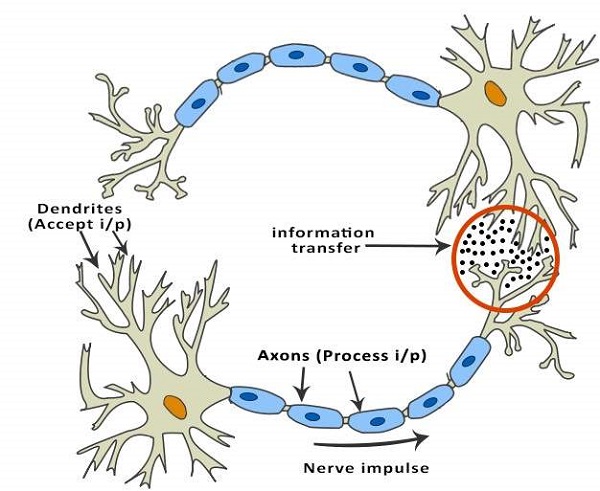
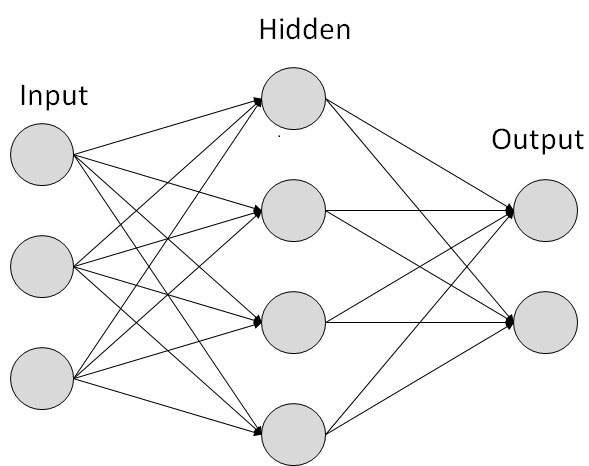
ANNs are composed of multiple nodes, which imitate the biological neurons of the human brain. The neurons are connected by links and they interact with each other. The nodes can take input data and perform simple operations on the data. The result of these operations is passed to other neurons. The output at each node is called its activation or node value.
Each link is associated with weight. ANNs are capable of learning, which takes place by altering weight values. The following illustration shows a simple ANN −
Types of Artificial Neural Networks
There are two Artificial Neural Network topologies − FeedForward and Feedback.
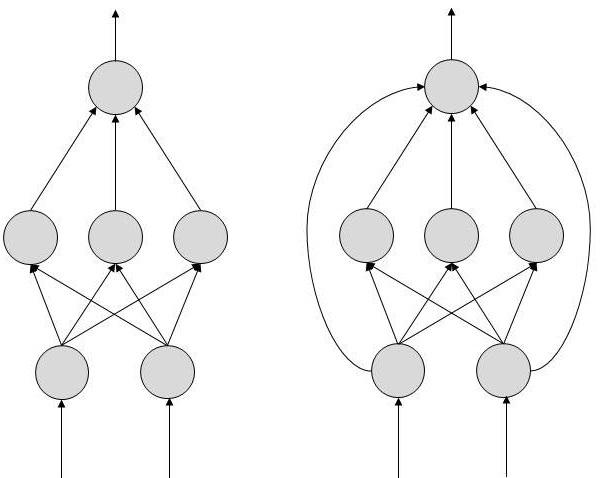
FeedForward ANN
In this ANN, the information flow is unidirectional. A unit sends information to other unit from which it does not receive any information. There are no feedback loops. They are used in pattern generation/recognition/classification. They have fixed inputs and outputs.
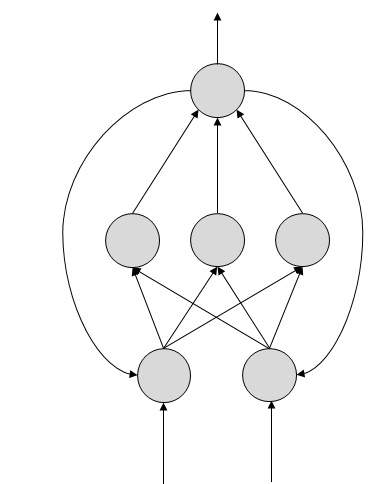
FeedBack ANN
Here, feedback loops are allowed. They are used in content-addressable memories.
Working of ANNs
In the topology diagrams shown, each arrow represents a connection between two neurons and indicates the pathway for the flow of information. Each connection has a weight, an integer number that controls the signal between the two neurons.
If the network generates a “good or desired” output, there is no need to adjust the weights. However, if the network generates a “poor or undesired” output or an error, then the system alters the weights in order to improve subsequent results.

Comments
Post a Comment